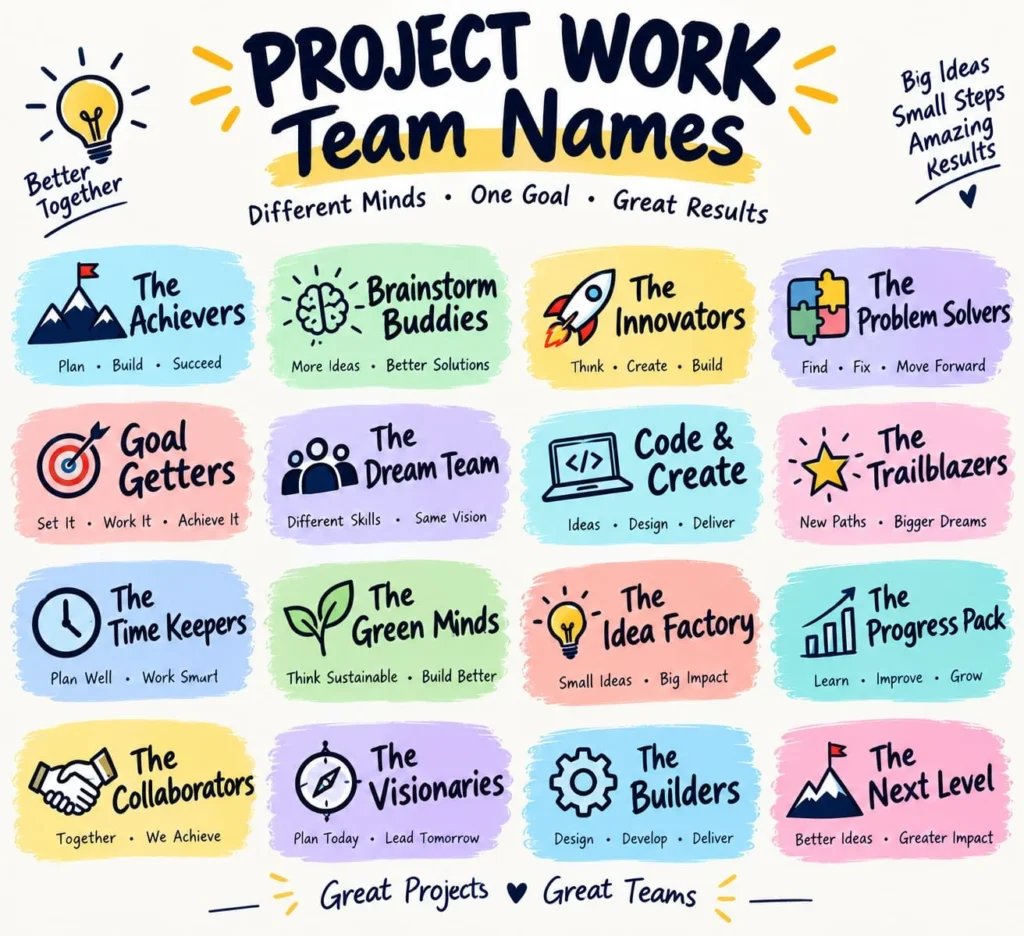
Project work names come in two kinds: descriptive names that say what the project is, and code names that don’t. Choose a descriptive name when people outside the team need to find the project, and a code name when the name must stay stable, private, or fun. Below is how to decide, themed name sets, and a simple way to keep names from colliding.
(If you meant topics for a school or college project, that’s a different search. This article is about naming projects at work.)
Two kinds of project names
| Descriptive name | Code name | |
|---|---|---|
| Example | Invoice Reminder Automation | Juniper |
| Tells you what it is | Yes | No |
| Survives scope changes | Poorly | Well |
| Works for outsiders and clients | Yes | Only with a description |
| Can stay confidential | No | Yes |
| Best for | Stakeholder reports, client work | Internal teams, early-stage and sensitive projects |
A project management guide makes a related point: internal project names can be more technical or humorous, while external ones need to be more professional and client-friendly. Most organizations end up with both, a plain name for outsiders and a code name for the team.
Why code names exist
Wikipedia notes that code names are used in the military and in espionage, but also in industry, to protect secret projects from rivals and to name projects whose marketing name hasn’t been decided yet. Two other benefits show up in practice:
- Leak tracing. One company’s internal proposal cites Apple as using different code names with external suppliers than with internal teams, so a name appearing online points to the source of a leak. That’s a secondhand report in a proposal, not a primary source.
- Stability. A descriptive name can become wrong as scope shifts. A proposal quoting Artsy Engineering warns that project names that overlap with domain concepts, like “search” or “images,” can nudge teams toward particular architectural decisions.
A lesson from military naming
Wikipedia says that British operation names have tended to be randomly generated by computer, and rarely reveal their parts or any political implications. American names, by contrast, have often carried messaging. The comparison it gives is Operation Telic versus Operation Iraqi Freedom, the latter chosen more for propaganda than for secrecy. It adds that Winston Churchill was particular about the quality of code names.
For workplace projects, the takeaway is that a code name shouldn’t announce a goal or boast. A neutral name keeps the project from sounding like a promise, and avoids a name that looks foolish if the project changes.
Themed name sets
One software shop described choosing project names alphabetically from a set of items, with every new project taking the next name. It prefers one-word names and lists themes it has considered: dog breeds, colors, famous explorers, trees, tax forms, English monarchs, dinosaurs, historical sites, and city street names. The same writer cautions that you may not have ownership of some of the names, so check before using them publicly.
| Theme | Example names | Best for |
|---|---|---|
| Trees | Alder, Birch, Cedar, Juniper, Willow | Software and platform teams |
| Cheeses | Brie, Gouda, Havarti, Manchego, Stilton | Teams that like a joke |
| Rivers | Danube, Indus, Niger, Volga | Data and integration projects |
| Minerals | Quartz, Garnet, Jasper, Onyx | Security and infrastructure |
| Spices | Cumin, Saffron, Sumac, Turmeric | Marketing and design |
| Constellations | Lyra, Cassiopeia, Draco | Long-running programs |
Pick a theme with enough entries to last, use alphabetical order if you want a built-in sequence, and let the team choose the theme. One engineering proposal recommends that engineers, not marketing or management, pick names from agreed-upon themes, with a simple registry and written rules for internal versus external use.
Descriptive names that work
For stakeholder-facing work, use a pattern like Outcome + Object: Invoice Reminder Automation, Onboarding Checklist Redesign, Warehouse Scanner Rollout. Keep these habits:
- Lead with what changes, not the tool you’re using.
- Avoid project names that sound like permanent departments.
- Add a start year or quarter if you run many similar projects.
A simple naming registry
A registry stops duplicates and gives future teammates a decoder ring. A one-page table is enough:
| Code name | Plain description | Owner | Status |
|---|---|---|---|
| Juniper | Customer billing portal rebuild | Billing team | Active |
| Cedar | Warehouse scanner rollout | Operations | Planned |
| Alder | Internal reporting cleanup | Data team | Done |
Rules of thumb
- One word, easy to spell and say. It will be used in chat, tickets, and meetings.
- Check how it reads in other languages if your team is global.
- Avoid real people’s names and brand names. The ownership caution above applies.
- Skip names that boast or promise. Neutral names age better.
- Check for accidental meanings. If the project has initials or a short form, read them aloud.
- Plan the rename. Code names tend to stick in repositories and documents, so decide who removes the old name once the project gets its final one.
FAQ
Should project names be funny?
Internal ones can be, as long as they stay professional if they leak. For anything a client or executive might see, choose something neutral.
Do code names only apply to software?
No. Wikipedia describes them in military, espionage, and industrial settings, and any project without a final marketing name can use one.
Can I use movie or character names?
They’re fun, but you may not own the name, and it can look unprofessional if it surfaces publicly. A neutral theme like trees or rivers is safer.
How do I avoid duplicates?
Keep a registry and check it before naming anything new. It takes a few minutes and prevents confusion.
Who should pick the name?
The team doing the work, within a theme the group agreed on. One proposal specifically says it shouldn’t come from management or marketing.
What happens to the code name when the product launches?
It’s usually replaced by the marketing name, but it can linger in code and documents. Decide in advance whether to retire it or keep it as an internal label.
Conclusion
Use descriptive names where clarity matters and code names where stability, privacy, or team culture matter. Draw code names from a themed set, keep a registry, and avoid names that boast, belong to someone else, or mean something unintended. When the project gets its final name, decide who retires the old one.